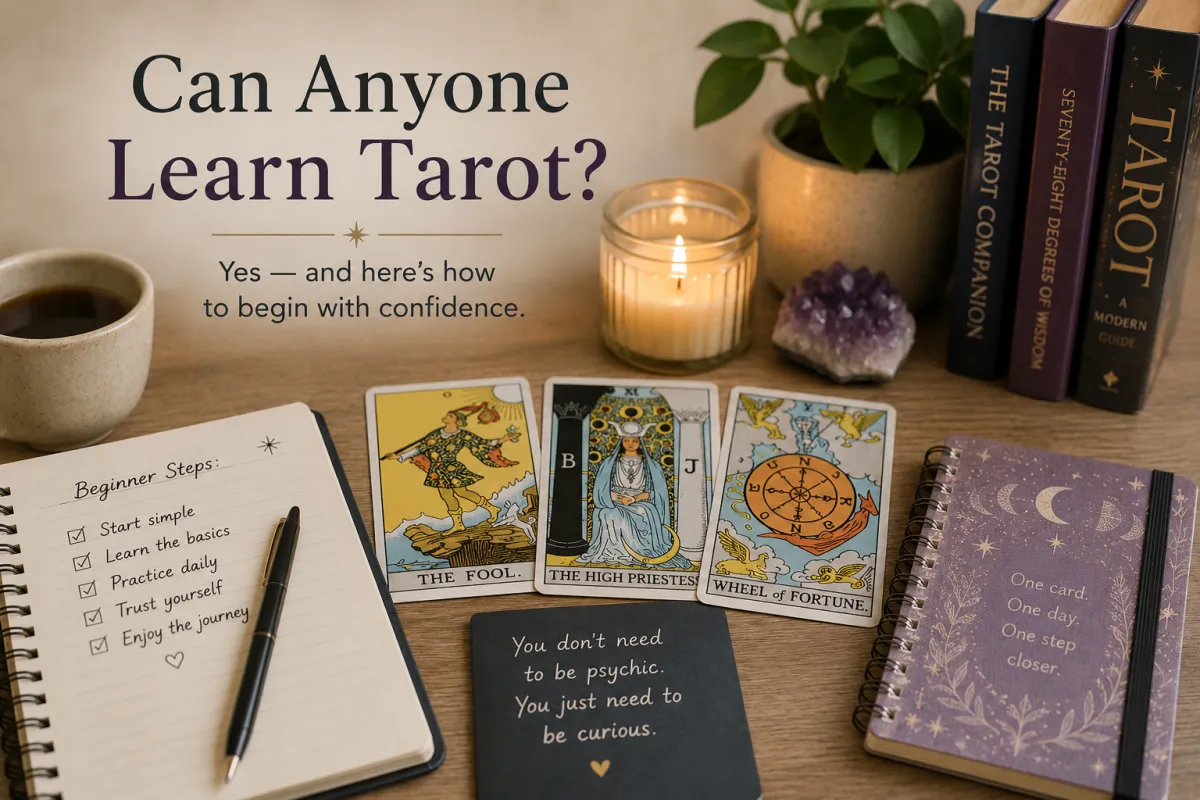
Can Anyone Learn Tarot?
TL;DR
Yes — anyone can learn Tarot. You do not need to be psychic, spiritual, or naturally gifted. Tarot is a skill that develops through practice, observation, and understanding the cards step-by-step.
IN SHORT
One of the biggest myths about Tarot is that only certain people can learn it.
Many beginners worry they are:
not intuitive enough
not spiritual enough
not psychic enough
But Tarot is not reserved for a special group of people.
Like any skill, Tarot improves through:
practice
patience
observation
experience
You do not need to “be born with a gift” to begin learning the cards.
Why Tarot Feels Intimidating at First
Tarot can look overwhelming when you first begin.
Seventy-eight cards.
Different meanings.
Symbols everywhere.
And when experienced readers appear confident, it is easy to assume they naturally “just know.”
But most readers began exactly where you are:
confused, uncertain, and trying to make sense of the cards one step at a time.
Confidence usually comes later.
Tarot Is a Skill — Not a Secret Talent
Learning Tarot is much closer to learning a language than discovering magical powers.
At first:
the cards feel unfamiliar
meanings seem difficult to remember
spreads look confusing
But gradually, patterns begin to make sense.
You start recognising:
recurring themes
emotional tone
symbolism
relationships between cards
This understanding develops through repetition and practice.
Not perfection.
You Do Not Need to Be Psychic
This is one of the most common misconceptions about Tarot.
You do not need:
supernatural abilities
visions
dramatic intuition
special spiritual powers
Good Tarot reading often comes from:
careful observation
pattern recognition
understanding symbolism
asking thoughtful questions
staying calm and reflective
Intuition can support the process, but it does not replace learning.
Why Some People Learn Faster Than Others
Everyone approaches Tarot differently.
Some people connect quickly with:
imagery
symbolism
intuition
Others prefer:
structure
keywords
practical interpretation
Neither approach is wrong.
The important thing is finding a method that feels natural for you.
Tarot is not a race.
Simple Ways to Start Learning Tarot
The best approach is usually the simplest one.
Start With the Basics
Learn:
the structure of the deck
Major and Minor Arcana
the four suits
simple card meanings
Trying to learn everything at once often creates overwhelm.
Pull One Card a Day
A daily card practice helps you:
build familiarity
strengthen observation
notice patterns over time
This is one of the easiest ways to grow confidence naturally.
Focus on Observation Before Memorisation
Before reaching for a guidebook, ask:
What stands out visually?
What emotion does the card carry?
What feels important here?
Tarot becomes easier when you learn to observe rather than panic about “getting it wrong.”
Common Beginner Mistakes
Trying to memorise every meaning immediately
Understanding develops gradually.
Comparing yourself to experienced readers
Every reader began as a beginner.
Expecting instant confidence
Confidence grows through repetition and practice.
Believing intuition must feel dramatic
Intuition is often quiet and subtle.
What Makes Someone Good at Tarot?
Not perfection.
And not pretending to know everything.
Strong Tarot readers are usually:
thoughtful
observant
reflective
open-minded
willing to keep learning
They understand that Tarot is not about performance.
It is about perspective.
Final Thought
Anyone can learn Tarot.
You do not need special powers.
You only need:
curiosity
patience
and a willingness to learn step-by-step
Because Tarot becomes much less intimidating once you realise you do not have to master everything immediately.
You simply have to begin.
