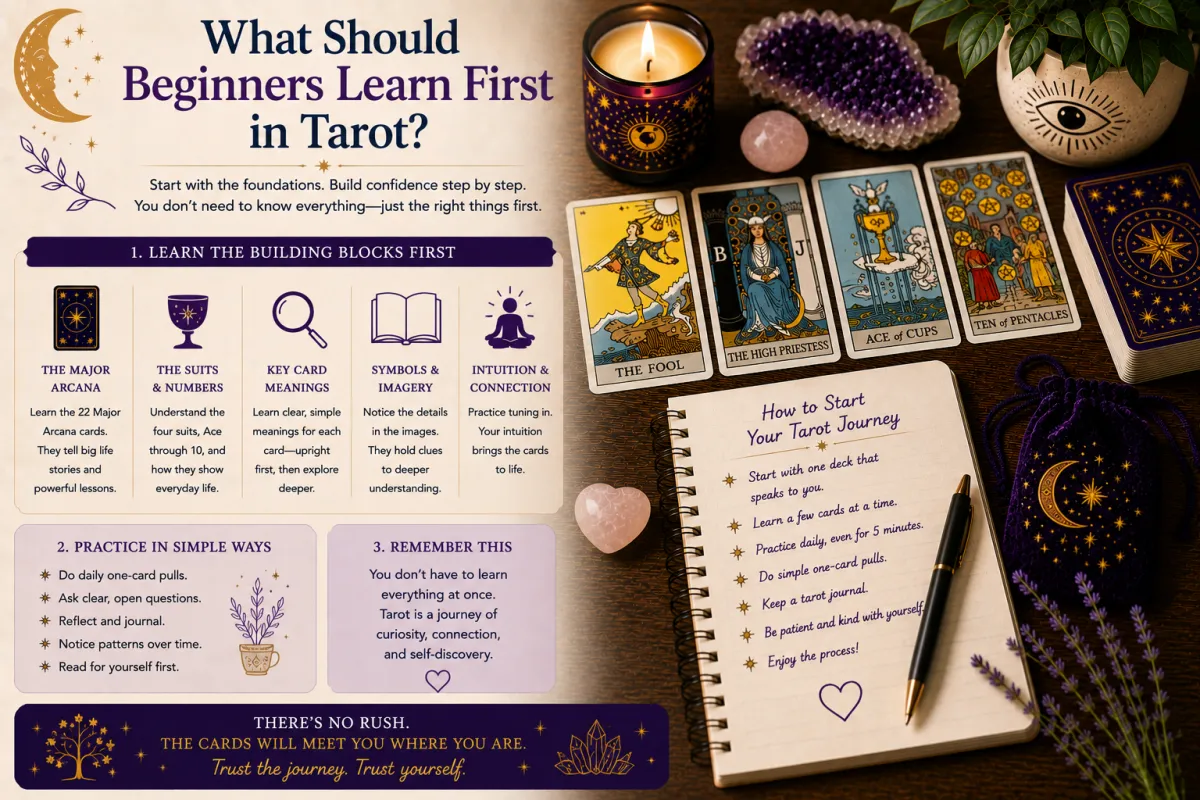
What Should Beginners Learn First in Tarot?
TL;DR
Beginners should start by learning the structure of the Tarot deck, the Major Arcana, the four suits, and how to interpret simple card meanings before moving on to advanced techniques.
IN SHORT
When people first discover Tarot, they often ask:
"Where do I even begin?"
It is a sensible question.
With 78 cards, numerous spreads, and endless resources available, it can be difficult to know what deserves attention first.
Fortunately, you do not need to learn everything at once.
A strong foundation makes the rest of Tarot much easier to understand.
REAL TALK
Many beginners make Tarot harder than it needs to be.
They jump straight into:
• Complex spreads
• Advanced symbolism
• Reversals
• Detailed guidebooks
Before they understand the basics.
Learning Tarot is much like learning a language.
You begin with simple words before writing long conversations.
The same principle applies here.
Start With The Structure Of The Deck
The first thing to understand is how the Tarot deck is organised.
The deck contains:
• 22 Major Arcana cards
• 56 Minor Arcana cards
The Major Arcana focuses on major life themes and personal growth.
The Minor Arcana explores everyday experiences and situations.
Understanding this distinction immediately makes the deck feel less intimidating.
Learn The Major Arcana First
Many readers begin with the Major Arcana because the themes are often easier to recognise.
Cards such as:
• The Fool
• The Magician
• The High Priestess
• The Lovers
• Death
• The World
Represent important lessons and stages of development.
Learning these cards provides a strong foundation for future study.
Understand The Four Suits
Once you are comfortable with the Major Arcana, learn the four suits:
• Cups = emotions and relationships
• Wands = action and ambition
• Swords = thoughts and communication
• Pentacles = work, money, and practical matters
These themes repeat throughout the deck and help make interpretation easier.
Practice Simple Readings
Many beginners learn fastest by doing.
Try:
• One-card daily readings
• Three-card spreads
• Tarot journaling
Simple practice helps transform knowledge into experience.
Focus On Understanding Rather Than Memorising
The goal is not to memorise hundreds of meanings.
The goal is to understand:
• Themes
• Symbols
• Patterns
• Stories
Tarot becomes much easier once you start seeing connections between cards.
WHY THIS WORKS
A structured learning approach reduces overwhelm and helps beginners build confidence gradually.
Each step supports the next.
COMMON MISTAKE
Mistake:
Trying to learn advanced techniques before understanding the basics.
Fix:
Master the foundations first and allow complexity to develop naturally.
COFFEE CUP TIP ☕
If you're unsure what to study next, spend a week focusing on a single Tarot suit.
Small learning sessions often create the biggest breakthroughs.
FAQ QUICK FIX
Beginners should learn:
The structure of the Tarot deck
The Major Arcana
The four suits
Simple spreads
Basic symbolism and themes
QUICK RECAP
The best way to learn Tarot is one step at a time.
Start with the deck structure, understand the Major Arcana and suits, and build confidence through simple readings.
RELATED QUESTIONS
→ Why Does Tarot Feel So Overwhelming at First?
→ How Long Does It Take to Learn Tarot?
NEXT STEP
Once you know what to focus on first, a natural question follows:
How long does it actually take to learn Tarot?
