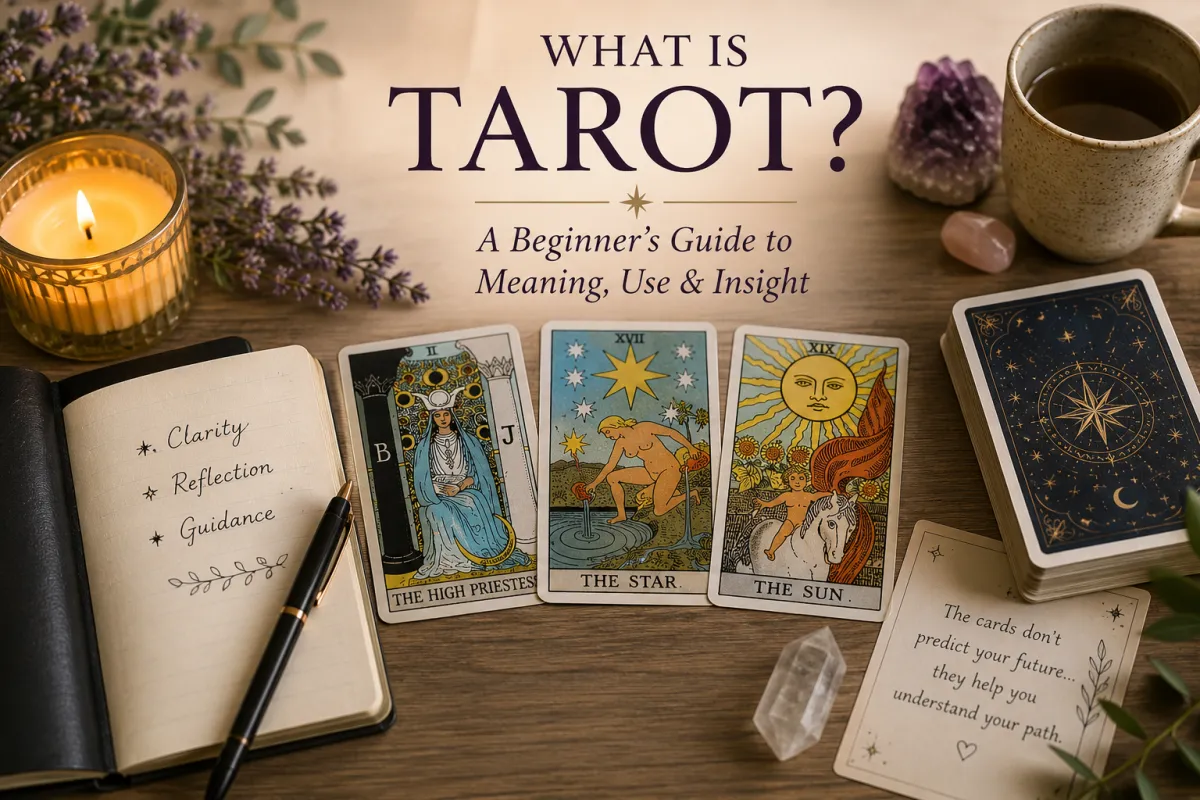
What Is Tarot and How Does It Work?
TL;DR
Tarot is a structured system of symbolic cards used for reflection, perspective, and personal insight. It does not predict fixed outcomes or require psychic ability. Tarot works by helping you observe patterns, situations, emotions, and possibilities more clearly.
IN SHORT
Tarot is often misunderstood.
Some people see it as fortune telling.
Others see it as something mystical or frightening.
But Tarot is much simpler — and far more practical — than that.
At its core, Tarot is a symbolic system designed to help you reflect on situations, recognise patterns, and explore different perspectives.
The cards do not control your future.
They help you better understand the present.
Why Tarot Still Matters Today
Even though Tarot dates back hundreds of years, the questions people bring to it are still very modern.
People want clarity about:
relationships
decisions
direction
uncertainty
emotional overwhelm
Tarot creates a structured way to pause and reflect.
And sometimes that pause is exactly what people need.
Not because the cards “know everything.”
But because they help reveal what may already be happening beneath the surface.
How Tarot Actually Works
Tarot works through symbolism, structure, and interpretation.
Each card represents themes, patterns, emotions, situations, or experiences that are common throughout life.
When cards appear together in a reading, they create a picture:
of what may be influencing a situation
what patterns are present
what perspectives may be missing
and what possibilities exist moving forward
The cards act as prompts for reflection rather than fixed predictions.
The Structure of Tarot
A traditional Tarot deck contains 78 cards divided into two sections.
Major Arcana
The Major Arcana cards represent larger themes and deeper influences.
These cards often relate to:
life lessons
transitions
personal growth
important turning points
Examples include:
The Fool
The Lovers
Death
The World
When Major Arcana cards appear, they usually suggest something more significant is unfolding.
Minor Arcana
The Minor Arcana reflects everyday life and practical experiences.
These cards are divided into four suits:
Cups
Wands
Swords
Pentacles
They often relate to:
emotions
actions
thoughts
work and practical life
Together, the Major and Minor Arcana create balance between the bigger picture and daily experience.
Do You Need to Be Psychic to Read Tarot?
No.
And this is one of the biggest misconceptions surrounding Tarot.
Tarot reading is not about having supernatural powers.
Good Tarot reading usually comes from:
observation
pattern recognition
understanding symbolism
asking thoughtful questions
and developing trust in your interpretation over time
Intuition plays a role, but intuition is not magic.
It is often quiet awareness rather than dramatic insight.
What Tarot Can — And Cannot — Do
Tarot can:
help you reflect
offer perspective
highlight patterns
encourage self-awareness
support clearer decision-making
But Tarot should not replace:
personal responsibility
professional advice
practical judgement
A healthy Tarot practice supports clarity rather than dependency.
Why Tarot Sometimes Feels Surprisingly Accurate
Many people are surprised by how relevant Tarot readings can feel.
This often happens because the cards reflect emotional patterns and situations that already exist beneath conscious awareness.
Sometimes the reading simply gives language to something you already feel — but have not fully acknowledged yet.
That can feel powerful.
Not because the cards are controlling events…
but because they help bring perspective into focus.
Common Beginner Mistakes
Looking for exact predictions
Tarot works best as a reflective tool rather than a fixed forecast.
Trying to memorise everything immediately
Understanding the structure matters more than perfect memorisation.
Reading from fear
Fear narrows interpretation and creates confusion.
Expecting instant mastery
Confidence develops through practice and observation over time.
A Better Way to Approach Tarot
Start simply.
Learn:
the structure of the cards
the meaning behind the symbols
how readings flow together
And most importantly:
allow yourself to observe before rushing for answers.
Tarot becomes much clearer when you stop trying to “perform” it…
and start learning how to understand it.
Final Thought
Tarot does not tell you who you are.
And it does not remove your ability to choose.
What it can do is help you pause long enough to see a situation more clearly.
And sometimes, clarity changes everything.
